
Acoustic panel: the stylish solution for a quiet space
In environments where noise levels interfere with comfort, acoustic panels are a decorative and functional solution. This stylish product optimizes sound absorption while enhancing professional interiors. Thanks to technical materials and custom printing, it combines acoustic efficiency, wall aesthetics, and ease of installation. In offices, meeting rooms, or open spaces, it reduces ambient noise without compromising the style or ergonomics of the space.

Why choose an acoustic panel for your interior?
Combining acoustic performance, decorative function, and visual quality in a single element: this is what acoustic panels offer in response to the requirements of modern professional interior spaces.
This wall-mounted solution appeals to architects, designers, and interior designers who are looking for an attractive solution that is quick to install and truly effective against noise pollution.
The advantages of a designer acoustic panel
- reduce background noise
- improve sound comfort
- enhance the image of a place
Comparison with other acoustic solutions
Unlike acoustic walls, which are often bulkier and more complex to install, acoustic wall panels are a lightweight solution that is quick to install and easier to integrate into existing décor.
It combines design and effective absorption without compromising on acoustic quality.
An excellent compromise that combines performance, aesthetics, and ease of implementation without straining the budget or project schedule.
How does an acoustic panel work?
Despite its decorative appearance, this acoustic product is based on a proven physical principle: absorbing sound waves to limit their reflection within interior spaces.
High-performance materials for sound absorption
The core of the acoustic panel is made of technical materials with high absorption capacity: mineral wool, eco-friendly foam, fibers.
Covered with a micro-perforated stretched fabric, the structure allows sound to pass through so that it can be better absorbed. This configuration significantly reduces noise without detracting from the wall's appearance.
Certain processes are also used on the stretched canvas wall, providing visual and acoustic continuity throughout the room.
The principle of echo reduction
In an untreated room, sound bounces off hard surfaces. The acoustic panel intercepts these waves as soon as they are emitted, limiting resonance and improvingspeech intelligibility.
This improvement in acoustic comfort is essential in workplaces and shared spaces.
Which acoustic panel should you choose? Our expert advice
The right acoustic panel always depends on the space to be treated, the room's uses, and aesthetic expectations. Here are the main criteria to consider when making the right choice.
Selection based on the room
Available styles, formats, and customization options
- Printing on canvas allows you to reproduce a work of art, an abstract visual, or a nature image, creating a strong decorative effect.
- Whether in black and white or bright colors, each wall panel becomes a design element.
- Some models offer premium options, such as eco-friendly canvas, a refined frame, or custom printing.
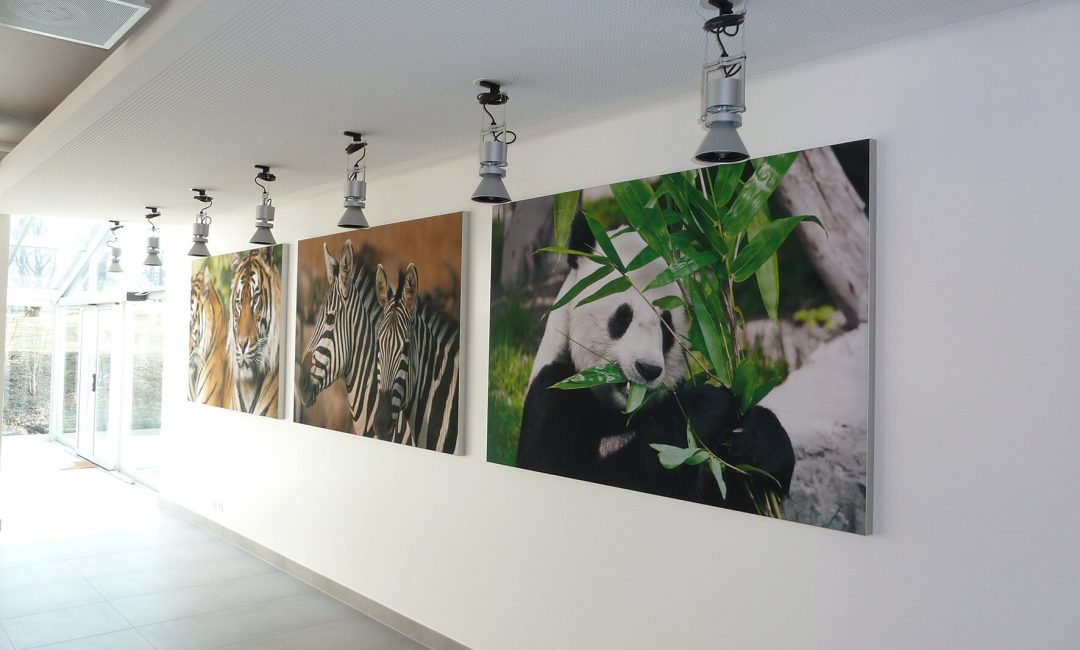
Installation and maintenance of an acoustic panel
The installation of an acoustic panel is designed to be quick and easy, even in the most demanding environments. Thanks to an intuitive wall mounting system, installation can be carried out without heavy work, in accordance with the constraints of the location.
Some models can also be integrated into an existing stretch ceiling for a uniform finish across the entire surface.
Ease of installation
Installation requires no preheating or complex structures. It is suitable for both professional spaces and private interiors.
The choice of material (printed stretched canvas, aluminum frame, eco-friendly sound absorber) influences durability and sound absorption levels.
Tips for maintenance and durability
Acoustic panels require little maintenance.
A dust-resistant, stain-resistant fabric can be easily cleaned by dry cleaning or with a soft cloth. Respecting the materials is essential to maintaining acoustic performance over time.
Certain specific finishes (e.g., eco-friendly fabric, discreet framing) improve the product's durability and adaptability, even in high-traffic environments.
A simple and quick solution to implement, ideal for professional environments.
Our acoustic panels: models, prices, and quick quotes
ALYOS® offers a comprehensive range of acoustic panels with sophisticated designs. Each model is designed to meet specific requirements in terms of sound absorption, size, and printed pattern. Our solutions are suitable for both large spaces and more intimate settings.
The price depends on the format, level of customization, and options chosen. Our team will assist you with the configuration and provide you with a free personalized quote.
Don't wait for noise pollution to affect productivity: find the right solution for your space now.
Reviews and testimonials from our satisfied customers
Choosing anALYOS® acoustic panel means investing in a controlled, high-performance, and elegant interior. Our customers share their feedback after installation in a variety of professional environments.



Would you like to achieve a similar result in your space? Entrust your project to our experts and receive a personalized quote.
Frequently Asked Questions
What is the lifespan of an acoustic panel?
AnALYOS® acoustic panel offers a lifespan of over 10 years, depending on the materials and conditions of use.
Is the acoustic panel compatible with all types of walls?
Yes, the mounting bracket fits most interior surfaces without causing damage.
Can the printing or size of the acoustic panel be customized?
Customization includes the visual design, size, and sometimes the material. Prints are made on acoustic paper, canvas, or fabric, depending on the model.
Is special maintenance required depending on the material of the acoustic panel?
Simply dusting is sufficient. Some fabrics, which have been treated to resist stains, can be dry cleaned.